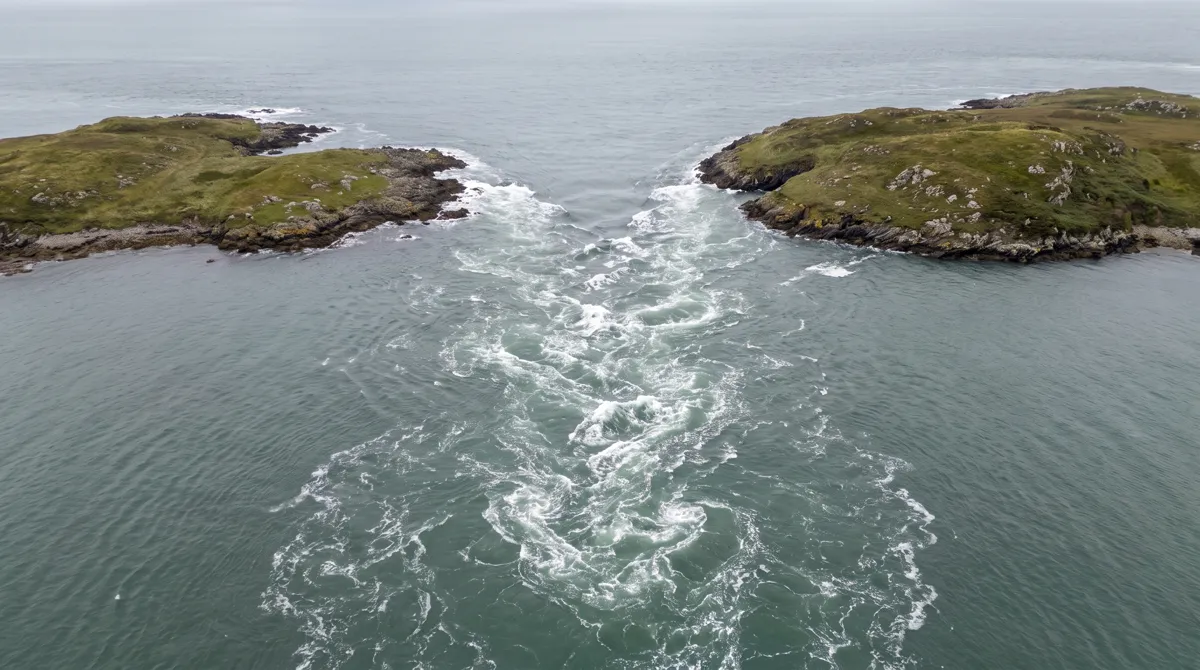
Four turbines on the seabed of the Inner Sound, owned by 1,400 people who live mostly within sight of it. This page shows what they are doing now, and what they have done.
How it works
The tide makes the current
Twice a day the Atlantic fills the North Sea through the Pentland Firth and twice a day it drains back. Between Stroma and the mainland that water is squeezed through a channel two kilometres wide and forty metres deep, and it runs at up to four metres a second on a spring tide. The current turns with the tide, so there are four slack periods a day when nothing moves and nothing is generated. We publish them.
The current turns the turbines
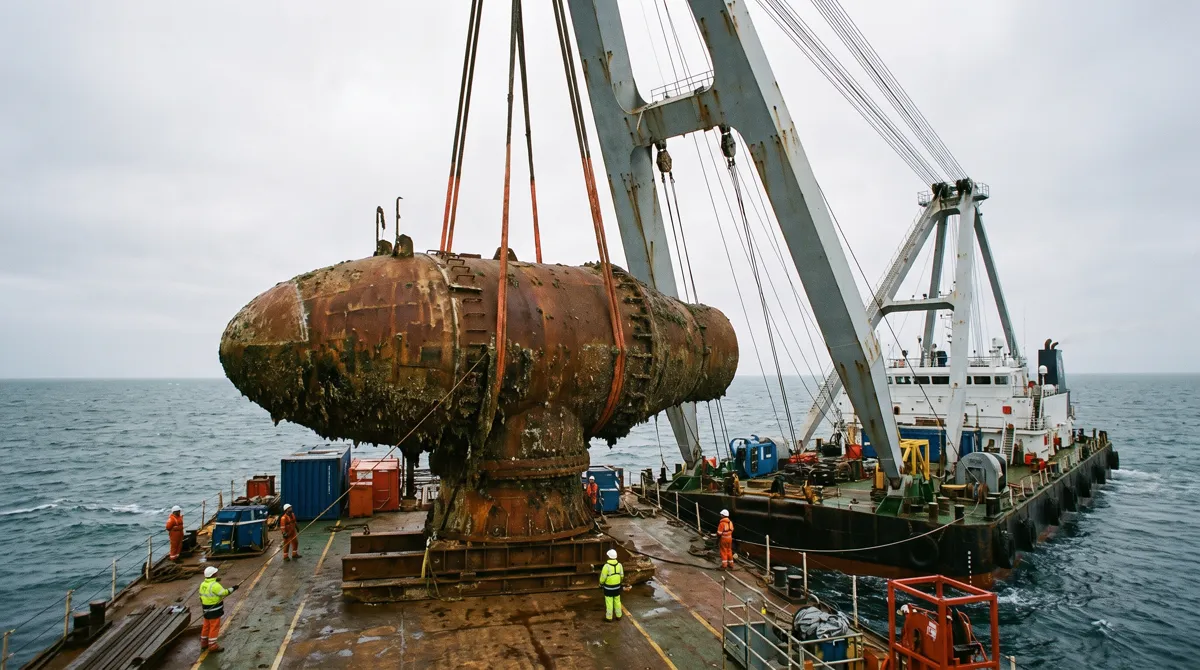
Each turbine is an 18-metre two-bladed rotor on a gravity base, eight metres proud of the seabed and well below the keel of anything that passes. The rotor yaws to face the flood and then the ebb. Power rises with the cube of the current speed: at 1 m/s the machine starts, at 3 m/s it reaches its rated 1.5 MW and holds there, and above 4.5 m/s it feathers to protect itself. That has happened four times since 2021.
The turbines pay the members
The array exports through a 33 kV cable to the substation at Gills Bay. We sell the electricity under a fifteen-year contract at a fixed price. After operating costs, loan repayments and a maintenance reserve, the surplus is paid to members as share interest, set each year by the members at the AGM. It has ranged from nothing, in the first year, to 4.5 per cent last year.
Today, minute by minute
Turn the dial through the day and everything on this page turns with it.
Drag the needle, use the arrow keys, or scroll the tape. Every figure comes from the published tide model; the chart is today's twenty-four hours in ten-minute steps.
The fortnight to 14 September
Why the output roughly doubles every two weeks
The tide in the Firth is mostly the Moon's doing, with a smaller pull from the Sun. When the two line up, at new and full moon, the range is large and the current fast: springs. A week later they pull against each other and the range shrinks: neaps. The two rhythms have slightly different periods, 12 h 25 min and 12 h exactly, so they drift in and out of step over 14.8 days. The chart shows the tide swelling and shrinking on that cycle, and beneath it the output following, only more so, because power goes with the cube of speed.
The fortnight above ran from neaps on 1 September to springs on the 8th and 9th, when all four machines sat at rated output for most of each tide. Two things interrupted it and both are marked: Boars was lifted for a seal replacement on the 4th, and on the evening of the 10th the network operator asked us to curtail to 40 per cent while the Gills Bay line ran on a single circuit through the gale. The 14-day total was — MWh, against a plan of 910.
Daily figures as a table
The co-operative
How a share works
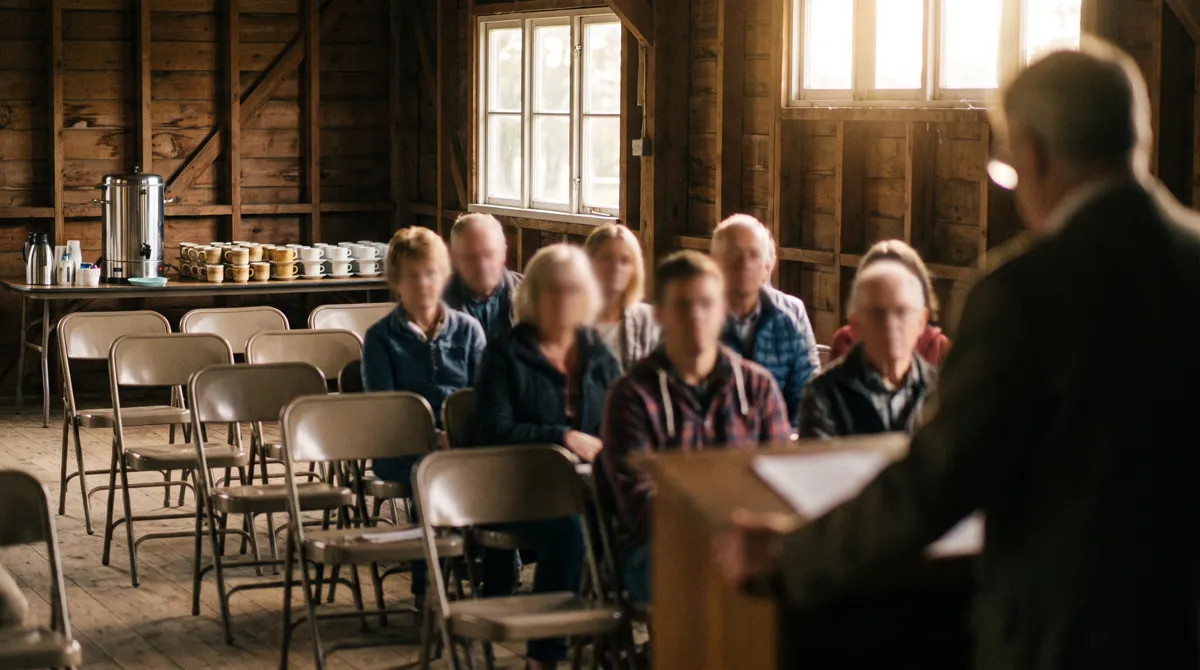
Stroma Tidal is a community benefit society. Members buy withdrawable shares of £1 each, at least 250 and at most 100,000, and each member has one vote however many they hold. The shares do not go up or down in value and cannot be sold on; after five years a member may ask to withdraw them, and the board pays out from a fund kept for that purpose, in the order the requests come in.
Each year the members vote on a rate of share interest, proposed by the board once the accounts are audited. The rate depends on what the tide did, what broke, and what we sold the power for. It has been paid every year since the first full year of operation. 2023 was low because Boars lost eleven weeks to a gearbox, and we said so at the time.
A membership form and the full share offer document are in the reports below. The offer is open to anyone over sixteen; there is no residency requirement, though about three-quarters of members live in Caithness or Orkney.
Reports
Annual figures
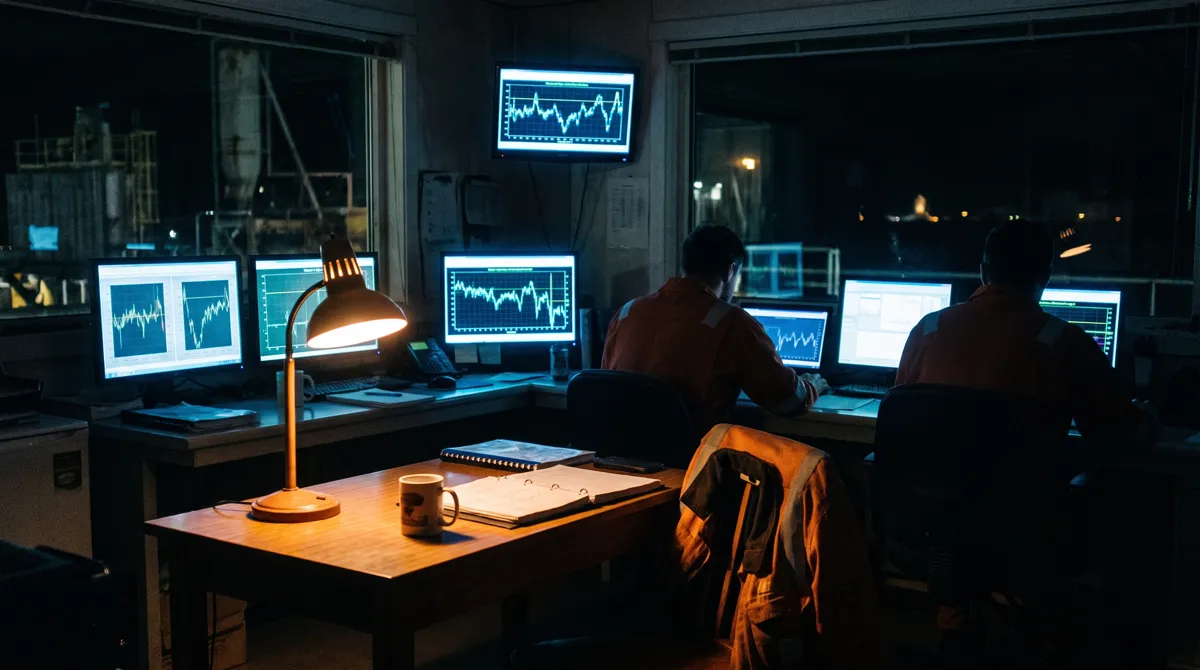
Audited accounts and the directors' report for each year, as filed with the Financial Conduct Authority. Generation is metered at the substation; availability is the share of tidal hours in which each machine was able to run.
| Year | Generation GWh | Availability | Capacity factor | Turnover £k | Share interest | Members | Documents |
|---|---|---|---|---|---|---|---|
| 2025 | 20.4 | 96.1 % | 38.8 % | 3,712 | 4.5 % | 1,388 | Annual report · Accounts |
| 2024 | 19.9 | 95.4 % | 37.9 % | 3,620 | 4.0 % | 1,351 | Annual report · Accounts |
| 2023 | 15.2 | 78.0 % | 28.9 % | 2,766 | 3.0 % | 1,302 | Annual report · Accounts · Boars gearbox, 11 weeks |
| 2022 | 19.6 | 94.7 % | 37.3 % | 3,567 | 3.5 % | 1,240 | Annual report · Accounts |
| 2021 | 17.8 | 91.2 % | 33.9 % | 3,239 | 2.0 % | 1,188 | Annual report · Accounts |
| 2020 | 6.1 | 88.5 % | — | 1,110 | 0 % | 1,094 | Annual report · Accounts · from commissioning, April |
Also: Share offer document, 2026 · Rules of the society · Membership form